Tracker

The Great NOI Leak

The Great NOI Leak Every unit turn comes with a hidden question: how much damage is actually going unrecorded? Based on our work with property owners and managers over the past year, the answer is more than most people realize, and the financial consequences compound faster than you might expect. Tracker was built to solve …

Every Job Has a Task and a Purpose

Last week on the All-In Podcast, Jensen Huang shared a simple idea that stuck with me: “Every job has a task and a purpose. AI will take over the task so humans can focus on the purpose.” He used radiology as an example. Years ago, many believed computer vision would replace radiologists. The logic seemed …

From Atoms to Bits: The Rise of Spatial Intelligence in Real Estate

Over the last two decades, innovations in proptech reshaped how residential property managers operate by creating a unified “digital system”. Rent ledgers, maintenance tickets, leasing funnels, and financial reporting moved from fragmented spreadsheets into unified systems of record. Managers gained real-time dashboards, operators scaled portfolios with confidence, and decision-making shifted from intuition to insight. Those …

Why Unit Turns Still Take 34.4 Days (and How Tracker Can Change That)

If you talk to any large owner-operator, you’ll likely hear the same frustration: despite having experienced teams and well-defined processes, the average unit turn still drags on for 34.4 days. Yet the industry standard goal is just 5. Why the gap? It’s not a lack of effort. It’s not a lack of knowledge. The real …

A Smarter Way to Power Through the Make Ready Checklist

Most “digital” checklists today are just paper checklists on a smaller screen. They may live inside your phone, but they still require someone to manually walk the unit, tap boxes, jot notes, and hope nothing gets missed. In many cases, they’ve become even more time-consuming, some stretching to 600+ items long. That’s not modernization. That’s …

Extending the Life of Your Appliances

Every unit turn comes with a set of familiar questions: Is this fridge still good? Can that stove make it through another lease? Should we replace it now or wait and risk a mid-lease failure? It’s a balancing act between cost, performance, and timing. And for many operators, it’s an act that happens with no …

From Assessment to Action: Coordinating the Make Ready Team

You’ve walked the unit and you’ve got the scope. The challenge now is making sure everyone involved knows what needs to happen and when. In last week’s blog, we looked at the importance of early condition assessment. But even with a clear picture of what needs to be addressed, the question remains: how do you …

Getting Eyes on the Unit: Why Early Condition Assessment Matters

When a resident moves out, the countdown begins. Every day that unit sits empty adds to vacancy loss, and every delay compounds downstream. One of the most overlooked friction points in the unit turn process is simply how long it takes to assess the condition of the unit. Not just a quick look, but a …

Vacancy Loss: How a LiDAR Camera Could Change the Game

Vacancy loss is one of the most persistent and costly challenges in property operations. While it’s easy to quantify, calculated simply as the number of days a unit sits empty between tenants, it’s much harder to control. Even the best-run portfolios face significant revenue loss during the turn process. For an average 300-unit property, these …

Using Computer Vision Data For Preventative Maintenance

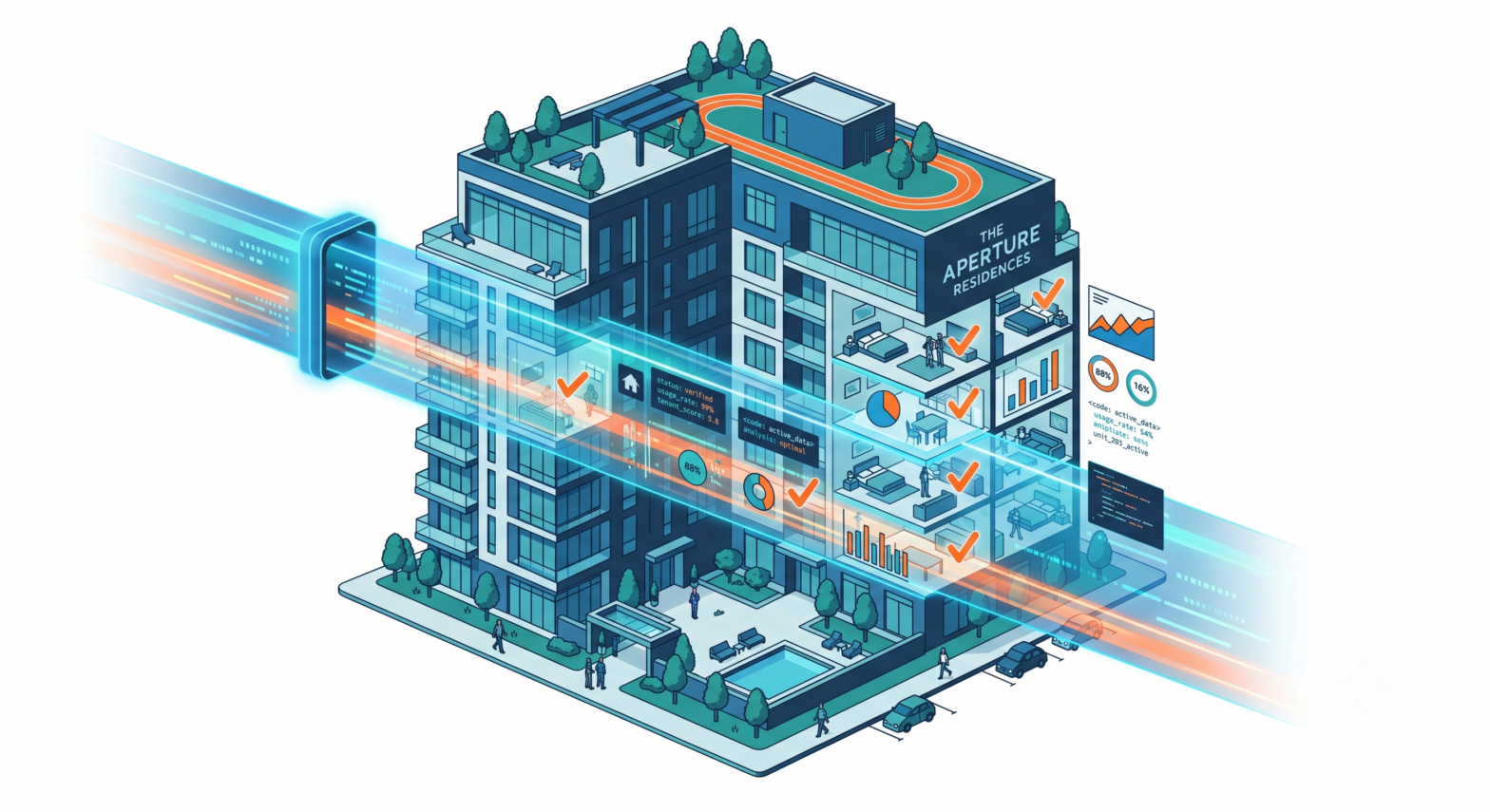
Imagine a world where residential property managers don’t just react to maintenance issues—they predict and prevent them. That’s the power of computer vision, and it’s why tools like Tracker are revolutionizing property management. By leveraging smartphone-powered computer vision, Tracker creates precise digital replicas of every unit, turning maintenance from a costly guessing game into a …