Property management has always been an information business.
Owners and operators make decisions based on what they know about their properties, rent rolls, maintenance history, resident activity, accounting records, work orders, vendor updates, and asset performance. Over time, property management software has become very good at organizing these records.
However, one of the most important sources of information has remained largely unstructured: the visual reality of the property.
Every day, property teams capture photos and videos during inspections and routine operations. These images contain critical information about property condition, asset quality, damage, completed work, risk, and future cost. The problem is that most of this visual information is never treated as data.
It is stored, shared, reviewed and forgotten. It may sit in an inspection report, a text thread, a shared drive, a vendor update, or a property management system as an attachment. Until recently, it was impossible to structure this visual data in a way that could be searched, analyzed, compared, or used to drive better decisions at scale.
Computer vision changes that.
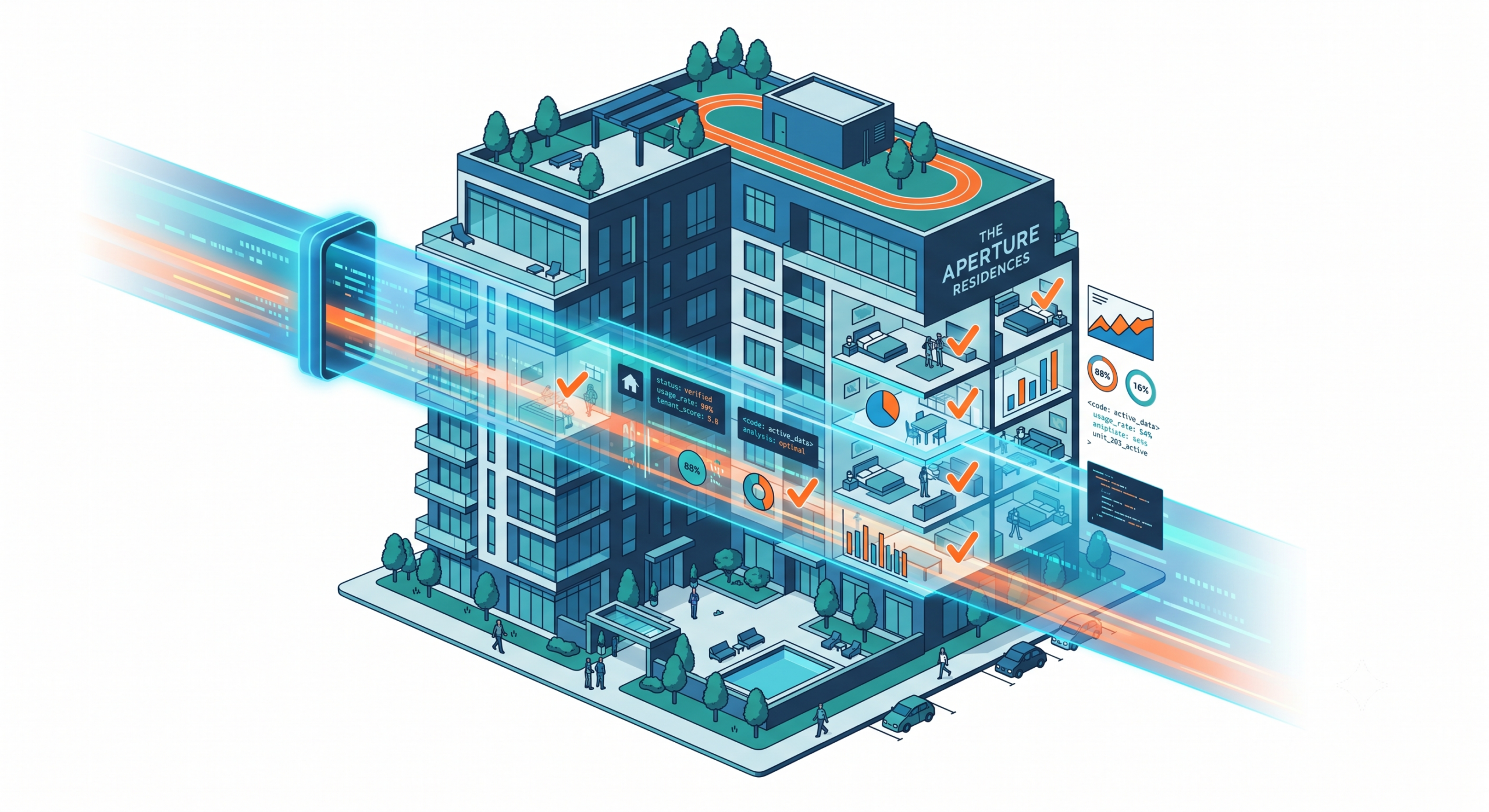
By allowing AI to identify, classify, and understand what appears in images and video, computer vision turns property photos into a new data layer for the entire real estate industry.
The Hidden Value Inside Images
By digitizing a property through a series of photos and videos, an owner can extract more operational information than any checklist ever could.
Images reveal the presence and condition of flooring, cabinets, countertops, appliances, fixtures, paint, windows, doors, smoke detectors, lighting, plumbing, and personal property. They expose damage, wear, cleanliness issues, incomplete work, safety hazards, unauthorized changes, or evidence of recurring maintenance problems that no human could reliably detect.
Historically, that information has required a human to interpret it manually, someone has to open the image, understand what they are seeing, write a note, render an opinion, and route the next step. That process is slow, inconsistent, and difficult to scale.
Computer vision allows property teams to extract meaning from visual information automatically. Instead of asking only “Was a photo taken?”, teams can begin asking far more valuable questions:
- What assets are present?
- What condition are they in?
- What changed since the last inspection?
- Was the work completed?
- Is there visible damage?
- Is this issue recurring across units?
- What does this tell us about future cost, risk, or asset performance?
That shift transforms images from static documentation into structured intelligence.
From Records to Reality
Most property management systems are built around records. They organize leases, residents, units, maintenance requests, payments, tasks, and accounting activity. These records are essential but they don’t always reflect the real world condition of the property.
A work order may say a repair is complete. A vendor invoice may say the job was done. An inspection checklist may say the unit passed.
Computer vision adds a reality layer to that system.
This is especially valuable in large portfolios, where ownership teams cannot personally see every unit, every turn, every repair, or every task completed by a vendor. The gap between what the system says and what is actually happening on the ground is where cost, risk, and accountability problems run rampant.
A Data Layer Built From Daily Operations
The power of computer vision in property management is that it does not require teams to create a completely new source of information. The data already exists.
Photos and videos are already being captured every day. The opportunity is simply to turn those images into structured data.
When computer vision is applied to property operations, each inspection, turn, maintenance visit, or vendor update enriches the property’s digital record. Over time, the portfolio gains a visual history of condition, change, performance, and risk.
That data layer supports decisions across every part of the business:
| Use Case | What It Enables |
| Turns | Identify damage, verify work, compare before & after condition |
| Maintenance | Spot recurring issues, understand asset condition, prioritize repairs |
| Vendor Ops | Verify work quality, compare performance, reduce disputes over completed work |
| Damage Recovery | Create stronger documentation to support resident chargebacks and claims |
| Risk Management | Identify safety issues, deferred maintenance, and future exposure |
| Asset Management | Understand condition trends across properties, units, materials, and capital |
| Transactions | Build an objective view of condition during due diligence & ownership changes |
This is why computer vision should not be thought of as a narrow inspection feature. It is a data new layer that runs in the background of a process already happening today.
Why Owners Should Care
For owners, the value of computer vision is not simply better photos. The value is a better way to manage your entire business.
Property condition directly affects revenue, expenses, risk, resident experience, asset value, and portfolio performance. Yet many owners still rely on fragmented, inconsistent and subjective information to understand what is happening inside their units. That creates avoidable cost:
- Missed damage recoveries reduce revenue
- Poor documentation creates disputes
- Incomplete vendor verification leads to overpayment or rework
- Delayed turns affect occupancy
- Deferred maintenance creates larger future expenses
- Inconsistent condition records make it harder to plan capital improvements or evaluate asset quality
Computer vision helps close the gap between what owners think is happening and what is actually happening.
It provides you with the objective truth. It allows teams to compare properties and units more consistently. It helps identify patterns that would be difficult to see manually and it gives ownership teams the clarity they need to make the best decisions.
In other words, computer vision helps move property management from opinion based reporting to evidence based intelligence.
The Role of AI
Computer vision is powerful on its own, but its value increases significantly when combined with AI.
Computer vision can identify what is in an image. AI can help interpret why it matters, summarizing findings, recommending next steps, and connecting visual evidence to workflows.
A computer vision model may identify a damaged cabinet, stained carpet, missing appliance, or incomplete repair. AI can help convert that observation into a task, a note, a claim file, a vendor follow-up, or an owner level summary.
This is where the new data layer becomes actionable.
The goal is not simply to collect more data, it’s to turn the information they’re already collecting into better actions. AI can help organize visual data by property, unit, room, asset, issue type, severity, and status. It can also help teams understand what needs attention now, what can wait, what has changed over time, and what patterns are emerging across the portfolio.
Connecting Visual Intelligence to Systems of Record
For computer vision to truly transform property management, it must connect to the systems teams already use.
Property management platforms remain the system of record for core business processes, units, residents, work orders, charges, tasks, vendors, and financials. Computer vision adds a visual intelligence layer on top of those systems.
The most valuable model is not replacement. It is connection.
When visual data connects to existing workflows, teams can use image based intelligence without abandoning the systems they depend on:
- Every work order can be supported by visual proof
- Every turn can be managed with before and after condition data
- Every resident charge can be backed by stronger evidence
- Every owner report can include more reliable insight into condition and performance
This creates a more complete operating picture: the system record, the visual evidence, and the intelligence that connects them.
The Future of Property Data
The next era of property management will be shaped by the ability to understand the physical world digitally.
For years, property technology has focused on digitizing forms, workflows, payments, communications, accounting, and maintenance records. That work has been critical but the physical condition of the property has remained harder to capture and quantify.
Computer vision is changing that.
It turns the property itself into a source of structured data. Every inspection, photo, video, turn, repair, and walkthrough becomes an opportunity to enrich the understanding of an asset and to build a competitive operating advantage.
Teams that can see conditions clearly, verify work objectively, identify patterns early, and connect visual intelligence to daily workflows will make better decisions. They will reduce avoidable costs, improve accountability, protect asset value, and operate with greater confidence.
Computer vision is not just making inspections smarter. It is creating the next data layer for property management.