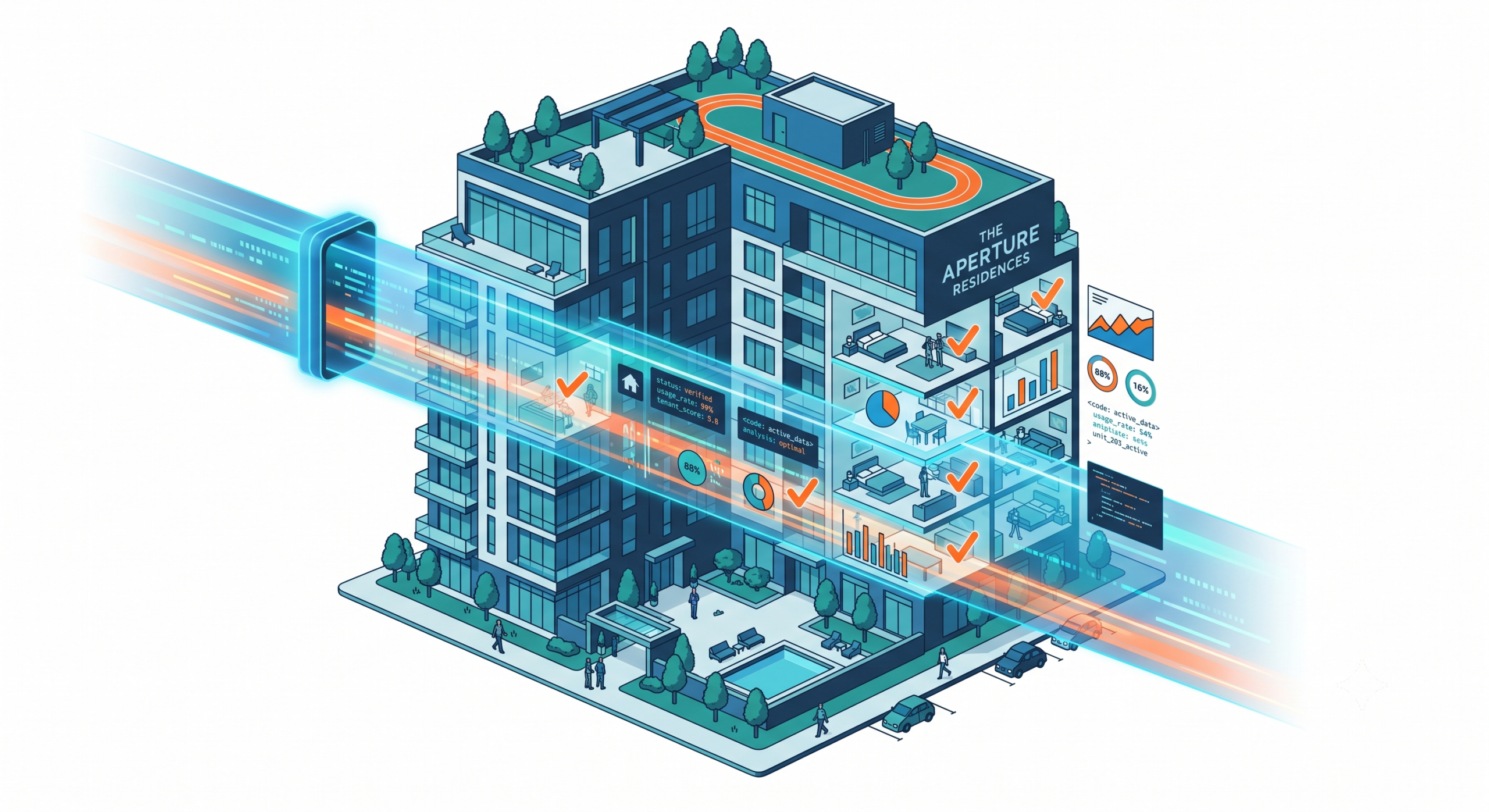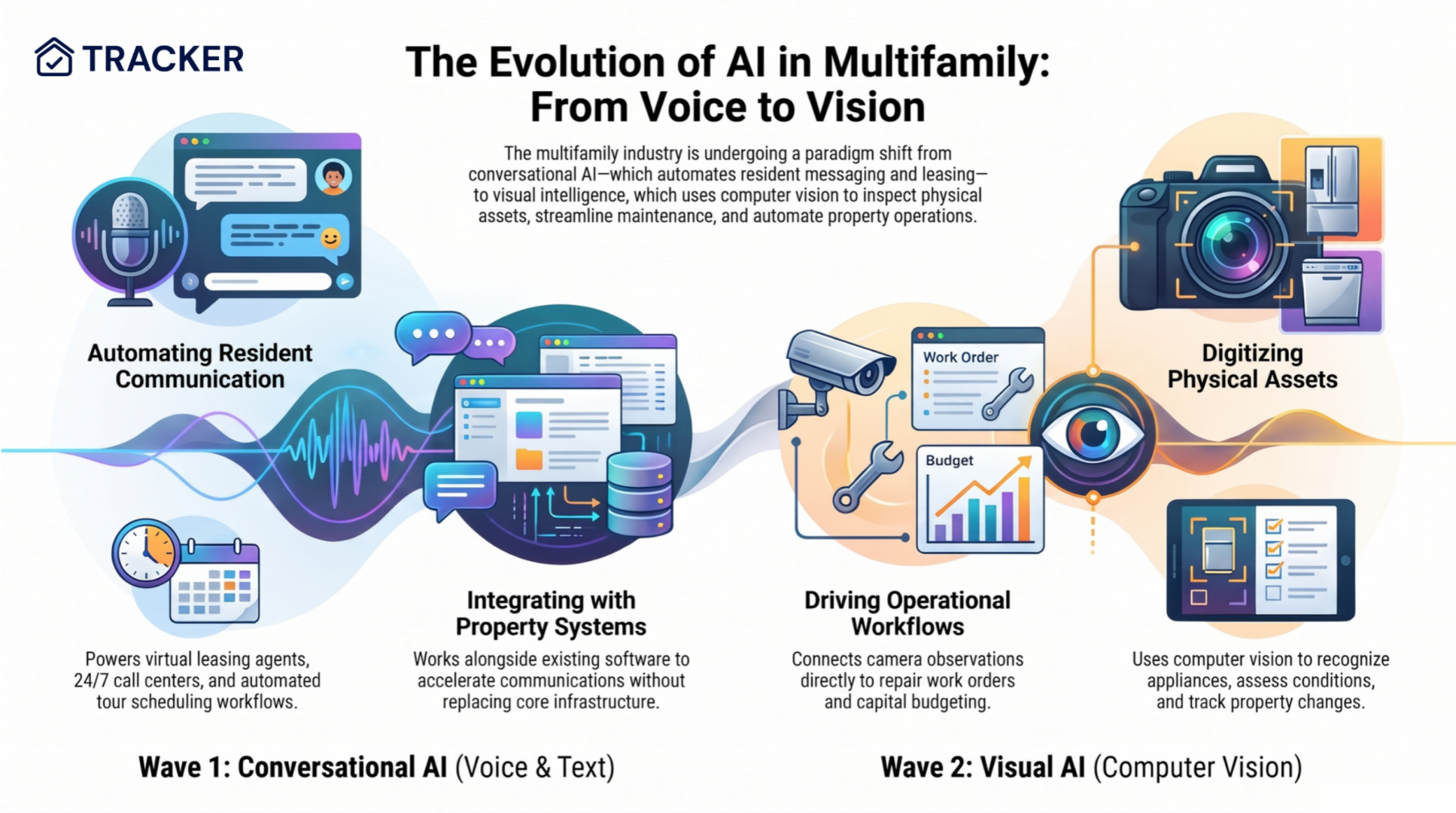
Artificial intelligence in multifamily property management is experiencing a fundamental paradigm shift. Wave 1 focused on communication: using conversational AI to manage leasing inquiries, tour scheduling, and resident support. Wave 2 extends intelligence into the physical property itself: utilizing computer vision and cameras to observe, track asset conditions, and automate operational workflows directly.
| 1st Wave: Conversational | 2nd Wave: Visual AI | Actionable Outcomes |
| Focuses on interactions & words. Virtual leasing, AI call centers, and round-the-clock resident support. | Focuses on property conditions. Computer vision interprets photo/video during inspections & walk. | Connects physical visual data directly to work orders, replacement cycles, and portfolio CapEx. |
1. The First Wave: AI That Listens and Speaks
The initial deployment of AI across multifamily portfolios solved a pressing operational hurdle: managing the immense volume of resident and prospective renter inquiries. Virtual leasing assistants, automated phone systems, and intelligent messaging allowed operators to scale interactions around the clock without proportional increases in staffing costs.
Strategic Lesson: The success of conversational AI proved that AI does not need to replace core property management systems (PMS) to deliver high ROI. Instead, it operates alongside legacy infrastructure, making workflows faster, more responsive, and increasingly automated.
2. The Second Wave: AI That Sees and Understands
While conversational AI understands what people say, computer vision enables software to interpret what cameras see. Every day, site staff perform unit walks, move-out inspections, and maintenance reviews. Historically, this rich physical information remained trapped in manual checklists, subjective notes, and fragmented records.
With visual intelligence, images or video captured by technicians automatically identify physical assets (appliances, flooring, fixtures), detect damage or wear, and link observations to specific unit records over time. This transforms a routine inspection from a static record into a dynamic data-gathering engine.
Comparative Analysis: The Two Waves of Multifamily AI
| Operational
Dimension |
1st Wave: Conversational AI | 2nd Wave: Visual Intelligence |
|---|---|---|
| Primary Domain | Communications & Inquiry Mgmt | Physical Property & Asset Mgmt |
| Input Data Type | Spoken voice, text messages, emails | Photos, video feeds, camera captures |
| Core Technology | NLP, LLMs, Voicebots, Chatbots | Computer Vision, Spatial Asset Recognition |
| Workflow Impact | Lead capture, tour booking, FAQ’s | Inspections, work order generation, CapEx |
| Data Longevity | Episodic interaction history | Longitudinal asset tracking across lifecycle |
| Primary ROI
Driver |
Staff labor savings & leasing conversion | Maintenance speed, asset life,
reduced OpEx |
3. Turning What We See Into What We Do
The true executive value of visual AI lies in bridging the gap between observation and execution. A photo of a damaged cabinet or aging HVAC unit is only valuable if it seamlessly triggers the downstream operational response.
- Automated Work Order Creation: Visual detection of damage during move-out walks automatically drafts repair tickets.
- Portfolio Asset Lifecycle Tracking: Recognizing specific appliance models across hundreds of units enables proactive capital budgeting.
- Quality Verification: Post-repair photos verify completed contractor work before invoice approval.
- Shortened Turn Times: Reduces manual handoffs between inspectors, property managers, and maintenance crews.
Executive Strategic Outlook
Tracker Strategic Focus: At Tracker, we believe the physical property represents the largest untapped frontier for AI value creation in multifamily housing. We are building the visual intelligence backbone that allows software to understand property conditions, track asset evolution, and directly drive operational workflows, helping operators lower operating costs, protect physical asset value, and maximize net operating income (NOI).